Showing posts with label iPod Nano. Show all posts

Tuesday, December 29, 2009

iPod Touch Asserts Its Presence


Apple's iPod Touch, introduced in late 2007 as essentially an iPhone minus the phone part, has quietly grown to prominence as a platform for more than just music playback and is changing the landscape for mobile devices.

While Apple (NASDAQ: AAPL) has frequently discussed the App Store by mentioning both the iPhone and iPod Touch together, the iPhone has typically stolen the spotlight thanks to the dynamic effect it had on the smartphone market, where it remains one of the industry's hottest sellers. Now it seems that the iPod Touch plays a much greater role for those 100,000 App Store apps than previously believed.

Flurry, a San Francisco-based mobile analytics company, said in a blog post that of the 58 million iPhone OS devices sold worldwide through September, the iPod Touch (sometimes called "iTouch") represents 40 percent of the market, with 24 million units sold.

At the most recent iPod event, which featured the public return of Apple's CEO Steve Jobs, the company's chief executive disclosed that Apple has sold 220 million iPods worldwide. So the iTouch's 24 million units is only about one-tenth of the total sold. Then again, iPod has been on the market since 2001 and the iTouch is a relative newcomer.

In that time, though, Flurry has noted how deeply it has dug into people's lives, particularly young users.

"Apple is using the iPod Touch to build loyalty with pre-teens and teens, even before they have their own phones (think: McDonald's Happy Meal marketing strategy,)" Peter Farago, vice president of marketing for Flurry, said in the blog post. "When today's young iPod Touch users age by five years, they will already have iTunes accounts, saved personal contacts to their iPod Touch devices, purchased hundreds of apps and songs, and mastered the iPhone OS user interface. This translates into loyalty and switching costs, allowing Apple to seamlessly 'graduate' young users from the iPod Touch to the iPhone."

"For OEMs hoping to challenge Apple, we believe an even greater sense of urgency must be adopted," he added.

Anecdotally, Farago said he's noticed a shift in usage habits by his friends' children.

"What I was seeing with friends who have kids between 7 and 12 is all the boys had a Nintendo DS for years. Now I'm noticing it seemed like they don't have Nintendo any more, they have an iPod Touch. Their parents are like, 'Please, 99 cent games or a $30 cartridge? I don't have to go to the store and I can control how much they spend?' ... It's a no-brainer," he told InternetNews.com.

All that invested content and data on the Apple device gets them early and locks them in, he added.

"Just that alone makes the iPhone/iTouch very sticky," Farago said. "All the content you can own and can use again with a new device is also appealing."

It's a great reinvention for the iPod, a which began as a simple music playback device. Some pundits predicted Apple would kill off the iPod Classic, which is the only unit left that uses a hard drive instead of Flash memory, but so far it hangs in there.

More than that, though, the iPhone and iTouch may be greasing the skids for Apple's long-rumored iTablet, iPad, or whatever the tablet device might be called.

The general consensus among the rumormongers is that it's a 10- to 12-inch pad that operates like an iTouch, with some form of wireless support. But unlike the iPod Touch and iPhone, Apple tablet apps could run in windows, and it might support multiple apps simultaneously -- if the rumors are to be believed.

At the very least, Farago said, the iPhone and iPod Touch remain valuable stepping stones to even more advanced Apple products.

"If you think about just the user interface learning Apple has gotten out of iTouch and the iPhone, a lot of that is very transferable," Farago said. "For Apple, it's been extremely valuable to see how users to interact with this thing and they are also training users on [the use of] touch."


source

Saturday, December 26, 2009

The Best iPhone and iPod Touch Games of 2009


Best iPhone Games

We reveal the best iPhone games of 2009 and 2010, plus the top free and commercial iPod touch game apps.

As some of the fastest-growing portable gaming platforms today, it’s no wonder that over a quarter of the 85,000 apps (applications) available to Apple iPhone 3G/3G S and iPod Touch owners are digital diversions. In fact, given these devices’ user-friendly, motion-sensing interfaces; sharp 3D graphics; selection of titles for all ages and interests at a variety of comfortable prices; and ability to retrieve content on-demand virtually anytime, anywhere, well… Let’s just say we’re confident that of the over two billion downloads users have presently notched up in the App Store, more than a few have been purchased with productivity the furthest thing from buyer’s minds. Looking for the perfect way to kill time while waiting for the bus or standing in line to score tickets to a sporting event? See below for our very own game industry analysts’ and experts’ top picks in several of the most popular categories:

Categories

Tuesday, December 22, 2009

How to take a Screenshot on an iPhone or iPod Touch

ipod-screenshot

Learn how to take a screenshot on an iPhone or iPod Touch with just a few simple steps. Screenshots from the iPhone and iPod Touch can be emailed, giving you the ability to capture anything on your device and quickly show it off to friends.

Taking a screenshot with an iPhone or iPod Touch running firmware 3.0 is a very easy process. Follow the simple steps below and you can email your friends screenshots showing proof of your highest gaming scores or hilarious text messages in no time.


step-1iphone-ipod-screenshotLocate the buttons. You need to locate the home and sleep buttons on your device. The home button is located at the bottom of the screen for both the iPhone and iPod Touch. The sleep button is on the top right for the iPhone and top left for the iPod Touch.

step-2iphone-ipod-screenshot-2Take a screenshot. Press the home and sleep buttons at the same time. Your screen will flash white and you’ll hear a camera shutter sound.

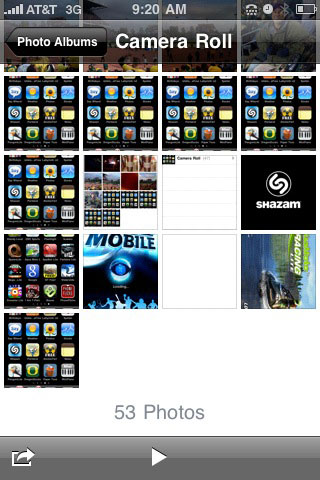
step-3iphone-ipod-screenshot-3Locate your screenshots. To locate the screenshots go to photos and look in camera roll. The screenshots will be located at the bottom because they are your latest images.

step-4iphone-ipod-screenshotDownload or email the image. You can either sync your device with iTunes to download the screenshots to your computer or email them to yourself or friends.

source

Five misconceptions about iTunes and iPods


There’s a lot of misinformation floating around about the iTunes/iPod/iPhone ecosystem. Here’s a truthful look at a few of the more popular notions out there. Are there others that you hear people talking about? Share them in the comments.


1. The iTunes Store uses digital rights management (DRM) technology to restrict the use of music that I buy.

When Apple launched the then-named iTunes Music Store in April 2003, it employed Apple’s FairPlay DRM that determined how many Macs (there was no Windows support at launch) you could play purchased AAC audio files on, and restricted usage to iTunes and iPods. Four years later, Apple began offering the option to purchase some songs and albums without DRM in a format called iTunes Plus. Then in April 2009 Apple finally moved to a completely DRM-free catalog.

So, if you purchased any iTunes Plus tracks between 2007 and early 2009, or any tracks after the DRM-free transition, your music has no restrictions on usage. If you own any FairPlay-encumbered music, however, the DRM remains. You can, however, upgrade your music to DRM-free by clicking the iTunes Plus link on the iTunes Store. From there you can choose to upgrade individual albums, individually purchased tracks, or your entire library. Besides removing the DRM, the updated tracks also double the bit rate from 128 Kbps to 256 Kbps.

Remember, though, that your Apple ID is still embedded in every track you buy.


2. AAC is a proprietary Apple format, and only works in iTunes or on an iPod or iPhone.

AAC, or Advanced Audio Coding, is a compression standard developed by the MPEG group and considered to be the replacement for MP3. Apple uses it for all music sold on the iTunes Store, but it works on a lot more hardware and software than just Apple’s iTunes/iPod/iPhone combo.

Microsoft’s Zune and Sony’s Walkman players support AAC, for example, as do many Sony Ericsson phones, the Sony PlayStation and PSP, streaming audio systems such as Sonos and Squeezebox products, and many software players.


3. I can’t burn an audio CD from iTunes tracks.

From the very beginning, Apple has allowed you to create standard audio CDs from your purchased iTunes tracks that would play in any CD player. The only restriction was the number of times you could burn an individual playlist. But you could get around that limitation by simply creating a new playlist. DRM-free files have no such restrictions placed on them.


4. I can’t get my DVDs into iTunes or play them on an iPod.

Because of the copy protection on commercial DVDs (and the Digital Millennium Copyright Act), you can’t stick a DVD into your Mac, launch iTunes, and press a button to convert it to an iPod- and iPhone-friendly format. But that doesn’t mean it can’t be done.

Using a free tool such as HandBrake, you can circumvent the copy protection of most DVDs and convert them to iTunes/Apple TV/iPod/iPhone-friendly formats. If HandBrake can’t handle it—which happens with some newer DVDs—you can use the $20 RipIt to first create an unprotected version of the DVD on your hard drive and then transcode it using HandBrake.

5. I can’t connect my iPod/iPhone to my TV to play videos.

Although there’s nothing in the iPod or iPhone box that lets you do so, Apple offers a few options for connecting your portable device to your TV for playback.

The Apple Component AV Cable and Apple Composite AV Cable ($49 each) plug into the Dock connector on your iPod, iPhone, or universal dock and provide connections on the other end to plug into your TV. As an added bonus, earch package also includes a USB power adapter in the box, normally a $29 purchase.


source

Thursday, December 17, 2009

The iPod touch generation

Is Apple's iPhone-without-a-phone the McDonald's Happy Meal of mobile communications?

Click to enlarge. Source: Flurry Analytics

Peter Farago of the mobile analytics firm Flurry uses data from its November report to make the case that Apple (AAPL) is quietly — and successfully — using the iPod touch to lock in a loyal base of under-age users who will eventually become the next generation of iPhone buyers.

"While it is clear that the iPhone has significant short-term revenue value for Apple," he writes in a report issued Sunday, "Flurry believes that the iPod Touch holds more long-term strategic value for Steve Jobs and team."

"In terms of Life Stage Marketing," Farago writes, "the practice of appealing to different age-based segments, Apple is using the iPod Touch to build loyalty with pre-teens and teens, even before they have their own phones (think: McDonalds' Happy Meal marketing strategy). When today's young iPod Touch users age by five years, they will already have iTunes accounts, saved personal contacts to their iPod Touch devices, purchased hundreds of apps and songs, and mastered the iPhone OS user interface." (link)

The evidence that Apple's strategy is working, Farago says, can be seen in a graph of end-user sessions recorded over the past six months.

Flurry, according to Farago, tracks 15 million end-user sessions every day from its "analytics solution" code embedded in 3,000 applications on 4 platforms: Apple's iPhone OS ( both iPhone and iPod Touch), Research in Motion's (RIMM) Blackberry, JavaME and Google (GOOG) Android.

The graph above shows that the iPod touch's share of those user sessions has grown 4 points over the past six months — the same as Android despite starting from a much larger user base. While the iPhone continues to grow in user sessions, its share in Flurry's data has dropped from 57% to 50%.

Even more significant, according to Farago, is that kind of things the kids are doing with their iPod touches.

"Anecdotally," he writes, "we know the 'iPod Touch Generation' is made up of heavy MySpace, Facebook and SMS users, who voraciously share their lives with, and influence their ever-expanding social graph. Importantly, this also includes promoting products they like. Empirically, Flurry compared how iPod Touch session usage has changed over the last six months across key application categories important to this demographic; namely, Social Networking and Games."

Farago's empirical evidence is displayed in the two charts below, which show the iPod Touch growing faster than both the iPhone and the Android devices in Flurry's Social Networking and Games categories.


source

Saturday, December 12, 2009

iPod Touch Is Apple’s Stealth Weapon for Mobile Growth

Steve Jobs once referred to the iPod Touch as “training wheels for the iPhone,” but it’s no novelty to Apple. An analytics firm estimates Apple has shipped about 24 million units of the iPod Touch, which represents about 40 percent of the devices running the iPhone operating system.

Mobile analytics firm Flurry claims it made the estimate based on a sample of 3,000 applications, 45 million consumers and four platforms. Apple provided a figure of 58 million devices running the iPhone OS, and of that total, Flurry believes 24 million are iPod Touch devices.

Flurry speculates that Apple’s iPod Touch is crucial for the company to retain and expand its market share in the mobile OS space.

“While it is clear that the iPhone has significant short-term revenue value for Apple, Flurry believes that the iPod Touch holds more long-term strategic value for Steve Jobs and team,” Flurry wrote in a blog post. “As all industry eyes look to the iPhone, the iPod Touch is quietly building a loyal base among the next generation of iPhone users, positioning Apple to corner the smartphone market not only today, but also tomorrow.”

That’s a believable number, because the iPod Touch caters to a broad market segment including gamers, teenagers (who presumably can’t afford the iPhone’s ~$100 monthly bill), Verizon customers avoiding AT&T and more.

The numbers also signify healthy growth for Apple’s iPhone platform. In September, Apple claimed it had shipped 40 million units of the iPhone and iPod Touch worldwide. In just three months, that number has increased 18 million — about 30 percent.


source

Monday, October 26, 2009

The iPod turns eight years old


Do you remember where you were on October 23, 2001? I don’t, but I do remember that Apple make a very big announcement, which—at the time—I thought was a big mistake: the iPod. Today marks the eighth year of the iPod’s existence and these days I find it hard to image a time when the iPod wasn’t a part of the cultural zeitgeist.

The first iPod had 10 hours of battery life, a FireWire port (which I still miss), and 5GB of storage for $399. Oh, and it was Mac-compatible only. When I first heard about it I thought, “Who the heck even has one gig of music? Dumb move, Apple.” Good thing Apple doesn’t call me up for business pointers because I couldn’t have been more wrong about the iPod if I had tried.

Over the years, the iPod has morphed into far more than an MP3 player but today, on its eighth birthday, let us take a moment to remember fondly that simpler time, when seeing someone with white headphones was a rarity and there was a sort of unspoken bond between iPod users. Here's the news story that ran on Macworld about the announcement, and you can watch the Apple music event in which Steve unleashes the iPod an an unsuspecting world.

Here’s to another eight years of the iPod. (I’m sure that I’ll be amongst the first to line up for the iPod cranial implant that Apple will introduce in 2016.)

For more iPod nostalgia, check out our iPod 5th anniversary podcast, Jason Snell's recollections of that day, a timeline of the first five years of iPod, and a selection of iPod quotes from back in 2001. You can also read Jonathan Seff's first look at the original iPod.


source

Saturday, October 24, 2009

Welcome to the University of iTunes


The wisdom of business professors, once only available to MBAs and business students, can now be accessed by anybody with an Internet connection.

Hundreds of universities, and a growing number of business schools, are making recordings of lectures, seminars and conferences available to the general public via Web sites such as iTunes and YouTube.

Leading business schools including University of Cambridge Judge Business School, Fuqua School of Business, and Yale School of Management make course content available for download through iTunes University (iTunes U), part of the of the iTunes online store.

That means those whose budget won't stretch to a two-year MBA can simulate the experience at home -- or at work, in the gym or anywhere else they choose. And even better for money-conscious learners, the iTunes U content can all be downloaded free of charge.

French business school HEC Paris is due to launch its iTunes U content in the next few months, but it has been running an ambitious podcast program since 2006.

Begun as an experiment in partnership with Apple, all new MBAs at HEC are provided with an iPod Touch. Around half of the MBA lectures are filmed using an automatic camera system and the footage is made available for students to download and view on their iPhones.

Vanessa Klein, HEC's project manager for iTunes U, told CNN that the iPod-enabled curriculum has proved a hit with students. As well watching lectures, she said the students' own presentations are recorded and made available for download so they can review their performance.

She says one teacher noticed that each year his MBA students would ask the same questions after his end-of-course summary, so he made a podcast of recurring questions and answers. After encouraging students to come up with new questions, he is now recording responses to those in an effort to compile a video archive of questions and answers.

Read more business features

Klein says that by making lectures available via iTunes U, HEC wants to be at the forefront of providing content for the rest of the world, but she acknowledges that the technology is also a great way to promote the business school.

"It's a good marketing tool, not as publicity but to really show people what we are providing," she told CNN.

"You can watch a lecture, learn a lot and think 'I wish I could be there.' The idea is to show what you could learn if you were at this place."

YouTube EDU was launched in March this year and hosts the YouTube channels of hundreds of universities. Earlier this month it added content from 45 universities in Europe and Israel and now holds videos of lectures and discussions provided by business schools including INSEAD, ESCP Europe and University of California Haas School of Business.

Launched at the same time as YouTube EDU, Academic Earth hosts videos from U.S. universities including Harvard, Yale and Princeton, although the business content is provided almost exclusively by Stanford University.

Offering less audio/visual content, but still full of business school information, MIT's Open Course Ware site gives free access to almost all MIT course content, including extensive lecture notes, assignments and exams from MIT's Sloan School of Management.

Interested in the "Advanced Topics in Real Estate Finance?" You can download the complete lecture notes from Sloan's 2007 course on the subject at MIT's Open Course Ware site.

Other universities have their own Open Course Ware sites and the Open Course Ware Consortium has been set up as an agglomerator site, providing content from more over 200 higher education institutions.

But it's iTunes U that's generating the most interest. The University of Oxford says there have been more than one million downloads from its iTunes U site, while Stanford University says its course on creating iPhone applications was downloaded more than one million times in just seven weeks.

This week's most popular business download on iTunes U is a University of Oxford lecture called "Entrepreneurship and the Ideal Business Plan."

It may not get as many downloads as Michael Jackson's posthumous single, but it should prove more useful when it comes to getting a business off the ground.


source

Friday, October 23, 2009

Apple lets iPhone apps get down to business


Apple said Friday that it is allowing businesses to sell content or services through applications given away for free at the iPhone maker's online App Store.

The shift of policy is seen as a boon to magazines and newspapers that can give away iPhone or iPod Touch programs featuring basic content and then sell premium articles piecemeal or by subscription.

"In App Purchase is being rapidly adopted by developers in their paid apps," Apple said in response to an AFP inquiry. "Now, developers can use In App Purchase in their free apps to sell content, subscriptions, and digital services."

Apple had previously barred suppliers of free iPhone applications from using the programs to sell content.

Suppliers of free applications can entice iPhone or iPod Touch users with free material in the hope they will eventually pay for enhanced content.

Apple gets a share of purchase prices of programs sold at the App Store and will reportedly share in revenue from sales in free applications.

The policy change comes as rumors abound that the California company behind the Macintosh computer, iPhone and iPod could release a portable tablet computer early next year that may double as an e-reader.

And not just a black-and-white e-reader but one that would boast full color and a 10-inch (25-centimeter) screen making it more of an oversized iPod Touch or a netbook computer, the increasingly popular low-cost mini-laptops.

If an Apple tablet computer does emerge, it would join an e-reader market that is becoming increasingly crowded but is undergoing tremendous growth.

An "iTablet" could also serve as an eye-pleasing platform for stories, video or other content sold through third-party applications.


source

Saturday, September 12, 2009

Apple iPod Touch, The Third Generation (first part)


The iPod Touch uses a two-piece design that marries a flat glass-covered front with a single piece of chromed steel that wraps around the back and edges. For a such a thin and seemingly fragile device, the Touch feels surprisingly sturdy and the steel offers a reassuring heft compared to the iPhone's plastic design.

Apple's Cover Flow music menu is a bit useless on the smaller screens of the iPod Nano and iPod Classic, but it's a fantastic way to browse music on the iPod Touch.

CoverFlow is fun, but when you want a more exact way of finding a song, you'll need to scroll though a list. Fortunately, Apple provides quick tabs for sorting at the bottom of the screen, and a fast-find alphabet strip on the right side. By pulling down on the menu, you can also uncover a hidden box for typing in your search request.

Considering all the features crammed into the iPod Touch, including email, internet, music, video, and games--it's a wonder that the device fits so easily in your pocket.

There aren't a lot of differences between the second and third-generation iPod Touch, but we did notice an improved screen quality. Here you can see the second-generation Touch (above) screen is a little more washed out and yellow-tinted compared to the third-gen model set at a comparable brightness setting.

Ever feel like handing the wheel over to Apple's music experts when it comes to figuring out what music to play? Well then, welcome to Genius Mixes. As an alternative to simply hitting shuffle and taking a random stream of music, Apple's automatic Genius Mixes group together songs in your collection into mixes based around common genres.


To be continued.......